Source Breast Milk Storage Bag for Feeding, Travel, and Storage
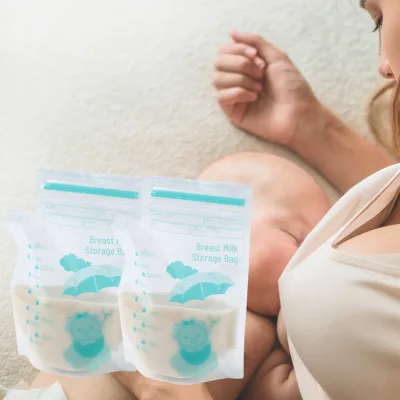
Compare 30 breast milk storage bag options from verified suppliers. Buyers can evaluate features like moisture proofing, transparency, and customization to find suitable packaging for feeding, travel, and storage needs.
Key considerations
Products List






Comprehensive Sourcing Guide
Strategic Sourcing Guide for Breast Milk Storage Bags
Understanding Product Specifications and Material Composition
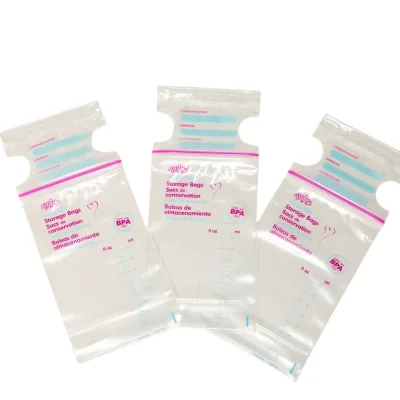
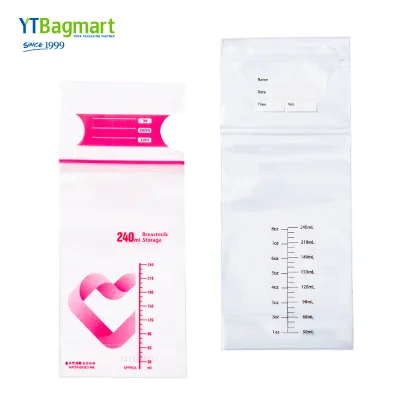
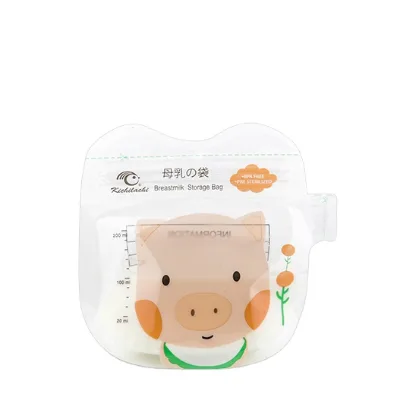
When sourcing breast milk storage bags, buyers must first distinguish between the various product models and their specific technical attributes. The market offers a diverse range of options, from dedicated breast milk storage solutions to general-purpose packaging bags that may serve similar functions. A critical observation in the current supply landscape is the variation in product models, including identifiers such as Breast Milk Storage Bags-046M, FT-0200, 001, 005, SP0021, SP00211, and 0805. Each model may carry distinct specifications regarding size, thickness, and material composition that directly impact suitability for freezing and storing breast milk.
The material composition is a primary determinant of performance. Available data indicates that some products utilize Laminated Material, while others are constructed from High-Density Polyethylene (HDPE) or High Pressure Polyethylene Plastic Bag raw materials. The use of PE (Polyethylene) is common, often combined with PET in composite structures like Pet/PE for enhanced barrier properties. For breast milk applications, the material must be robust enough to prevent leakage during freezing and thawing cycles. Buyers should verify that the selected model explicitly supports food packaging applications, as indicated by the "Application: Food Packaging" attribute found in several listings.
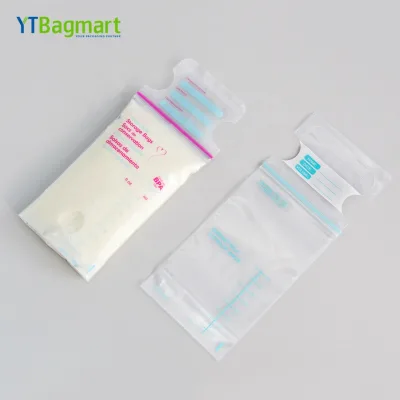
Thickness is another vital specification. Observed data points to a thickness range of 51-100 microns for certain models, while others offer customized thickness based on buyer requests. Thicker bags generally provide better puncture resistance and insulation against temperature fluctuations, which is essential for long-term freezer storage. However, excessive thickness may reduce the bag's flexibility and ease of use. The hardness of the product is noted as "Soft," which is desirable for handling and pouring, but the structural integrity must remain intact. Transparency is also a key feature, with products described as "Transparent," allowing users to visually inspect the volume and clarity of the stored milk without opening the seal.
Compliance, Safety Standards, and Certification Verification
Safety is the paramount concern when sourcing products intended for infant nutrition. Buyers must rigorously verify that the manufacturing process and final product meet international safety standards. The supply data highlights several certifications and features relevant to safety compliance. Notable certifications include ISO9001, which indicates a quality management system, and FDA certification, which is critical for food contact materials in the United States market. The absence of BPA (Bisphenol A) is explicitly listed as a highlight for certain products, a crucial safety feature for plastic packaging used with infant food.
However, buyers should not assume that every listed product possesses these certifications. The presence of "ISO9001" or "FDA" in a product listing should be treated as an observation of specific items rather than a universal attribute of all breast milk storage bags. Procurement teams must request valid, current certificates of compliance from the supplier for the specific model being ordered. It is also essential to verify the origin of the materials. While the data indicates origins in China, specifically in regions like Shandong and Qingdao, the location itself does not guarantee safety. The focus must remain on the raw materials used, such as High-Density Polyethylene, and whether they are food-grade.
The standard for these products is often listed as "customized," which implies that the manufacturing process can be tailored to meet specific regulatory requirements of the buyer's target market. This flexibility is advantageous but requires clear communication. Buyers should ensure that the "Customized Standard" explicitly covers the necessary food safety regulations for their region, such as EU regulations or FDA 21 CFR. Additionally, the "Moisture Proof" and "Waterproof Performance" attributes are essential to prevent contamination and leakage, but these should be validated through third-party testing reports rather than relying solely on supplier claims.
Cost Drivers and Economic Factors in Procurement
The economic landscape for breast milk storage bags is influenced by several variable factors, primarily material costs, order volume, and customization requirements. The observed price range in the market spans from $0.03 to $6.13 USD per unit. This wide disparity suggests that price is heavily dependent on the specific model, material thickness, and the complexity of the design. Lower-priced items likely correspond to basic models with standard specifications, while higher-priced items may include advanced features like zip-lock seals, custom printing, or specialized barrier materials.
Minimum Order Quantity (MOQ) is a significant cost driver. The data reveals an MOQ range from as low as 2 units to as high as 100,000 units. For startups or small retailers, an MOQ of 10,000 pieces, as seen in some listings, may present a barrier to entry. Conversely, suppliers offering lower MOQs might charge a higher unit price to cover setup costs. Buyers must balance the upfront capital expenditure against the per-unit cost savings achieved through bulk purchasing.
Customization is another major factor affecting cost. Attributes such as "Customized Design," "Gravure Printing," and "up to 10 Colors" indicate that personalized branding adds to the production cost. The "Multiple Extrusion" and "Composite Packaging Bag" processes also contribute to the manufacturing complexity and, consequently, the price. Furthermore, the packing method, whether "Each Packed in a Polybag," "25PCS Per Box," or "Standard Carton Packing," impacts logistics costs. Buyers should calculate the total landed cost, including packaging efficiency and shipping volume, rather than focusing solely on the unit price. The "Market: Hot Sale in All Market" attribute suggests high demand, which can stabilize prices but may also lead to supply chain bottlenecks during peak seasons.
Typical Applications and Functional Versatility
While the core keyword is breast milk storage, the product data reveals a broader spectrum of applications that buyers should consider. Many of the listed items are designed for "Drinking" and "Packaging Bag" purposes, indicating their versatility in general food and beverage storage. Specific models are explicitly noted for "Popsicle Packaging" and "Upright Bag" varieties, suggesting that the technology used for breast milk storage is adaptable to other frozen liquid products.
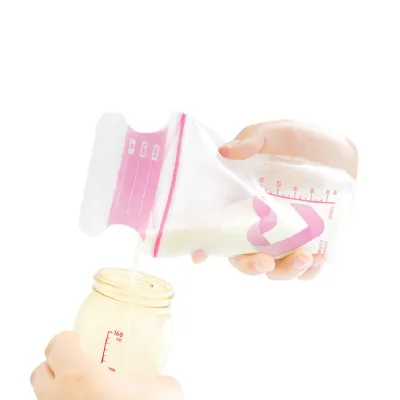
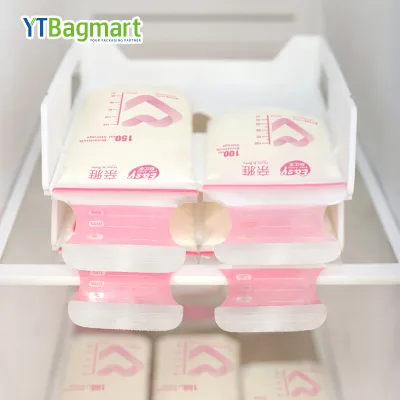
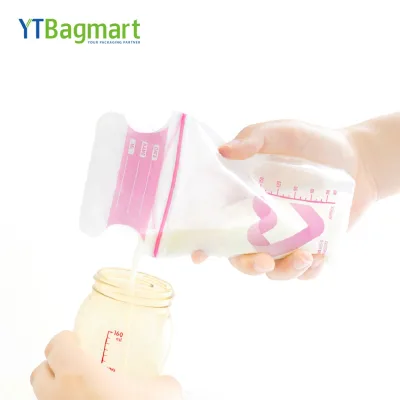
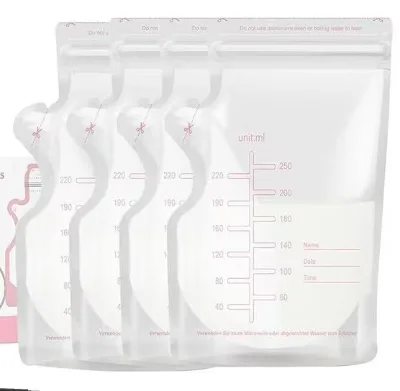
The "Three-Dimensional Bag" shape and "Zip Lock" seal type are particularly relevant for breast milk storage, as they facilitate easy pouring and secure sealing to prevent leaks. The "Upright Bag" variety is advantageous for freezer storage, as it allows the bags to stand upright, maximizing space efficiency in freezer compartments. The "Disposable" nature of these bags is a standard feature, ensuring hygiene and convenience for parents who prefer single-use solutions over reusable containers.
Buyers should also note the "Moisture Proof" and "Waterproof" features, which are critical for maintaining the quality of breast milk during storage and transport. The "Transparent" quality allows for visual monitoring of the contents, which is essential for inventory management and ensuring the milk has not spoiled. The "Soft" hardness of the material ensures that the bags are easy to handle, even when frozen. However, the "Application: Food Packaging" attribute serves as a broad category; buyers must confirm that the specific model is suitable for liquid dairy products and not just dry goods or general packaging.
Supplier Evaluation and Manufacturing Capabilities
Evaluating suppliers requires a deep dive into their manufacturing capabilities and production processes. The data indicates that suppliers utilize "Multiple Extrusion" and "Composite Packaging Bag" making processes. These advanced techniques are necessary to create the multi-layer structures required for effective barrier protection against moisture and air. Buyers should assess whether the supplier has the technical capacity to produce the specific thickness and material combinations required for their needs.
The "Customization: Available" attribute suggests that suppliers are flexible in meeting specific buyer requirements. This includes custom sizes, as noted by the "Size: Customized Size" specification, and custom designs. However, flexibility should not come at the expense of quality control. Buyers should inquire about the supplier's capacity to maintain consistency across large production runs, especially given the high MOQs observed in some listings.
Geographic location is another factor in supplier evaluation. The data points to origins in China, with specific mentions of Shandong and Qingdao. These regions are known for their manufacturing infrastructure, but buyers should verify the supplier's logistical capabilities to ensure timely delivery. The "Capacity: 220ml" attribute for one model provides a reference point for volume, but buyers must ensure the supplier can scale production to meet demand without compromising quality.
Quality Control and Long-Term Procurement Strategy
Implementing a robust quality control (QC) strategy is essential for maintaining product integrity. Given the "Disposable" and "Food Packaging" nature of the products, QC should focus on seal integrity, material purity, and dimensional accuracy. Buyers should request sample testing for leakage, burst strength, and seal strength before committing to large orders. The "Waterproof Performance" and "Moisture Proof" attributes must be verified through practical testing, not just supplier assertions.
Long-term procurement considerations involve building a relationship with suppliers who can offer consistent quality and reliability. The "Customized Standard" and "Customized Design" options allow for long-term branding opportunities, but the supplier must be capable of maintaining these customizations over time. Buyers should also consider the environmental impact, noting that some products are listed as "Recyclable." While this is a positive attribute, the actual recyclability depends on local waste management infrastructure and the specific material composition.
To mitigate risks, buyers should diversify their supplier base and avoid over-reliance on a single source. The wide range of MOQs and price points allows for a tiered sourcing strategy, where high-volume orders are placed with cost-effective suppliers, and specialized or urgent orders are handled by more flexible partners. Regular audits and quality checks should be part of the ongoing procurement process to ensure that the products continue to meet safety and performance standards.
Comparative Analysis of Product Attributes
The following table summarizes key attributes observed across different product models to assist buyers in making informed comparisons.
| Attribute | Model A (046M) | Model B (FT-0200) | Model C (SP0021) | Model D (0805) |
|---|---|---|---|---|
| Material | Laminated Material | High-Density Polyethylene | PE | High Pressure Polyethylene |
| Thickness | 51-100 microns | Customized | Customized | Not Specified |
| Seal Type | Not Specified | Not Specified | Zip Lock | Not Specified |
| Certification | Not Specified | ISO9001 | FDA | Not Specified |
| Origin | China | Shandong | Qingdao | China |
| Packing | Polybag | As Requests | 25PCS/Box | Standard Carton |
| Key Feature | Disposable, Moisture Proof | No BPA | Recyclable | Waterproof |
| MOQ | Not Specified | Not Specified | 10,000 PCS | Not Specified |
This comparison highlights the diversity in specifications. Buyers must align these attributes with their specific operational needs. For instance, if BPA-free status is a non-negotiable requirement, Model B is a strong candidate based on the "No BPA" highlight. If high-volume ordering is necessary, the 10,000 PCS MOQ of Model C must be factored into the procurement plan. The variation in packing methods also affects logistics planning, with "Standard Carton Packing" potentially offering better protection during shipping compared to individual polybag packing.
In conclusion, sourcing breast milk storage bags requires a meticulous approach that balances technical specifications, safety compliance, cost efficiency, and supplier reliability. By leveraging the observed data and adhering to strict quality control measures, buyers can secure a supply chain that meets the high standards required for infant nutrition products.
FAQs
What materials are used for breast milk storage bags?
These bags typically use Laminated Material, High-Density Polyethylene, or PE. Some models feature composite structures like Pet/PE for enhanced barrier properties to ensure safety during freezing and thawing cycles.
Which certifications should I verify for food safety?
Buyers should verify ISO9001 and FDA certifications for food contact materials. It is critical to request valid certificates for the specific model, as not every listing guarantees these standards universally.
Can I find bags with a specific thickness requirement?
Yes, some models offer thickness between 51-100 microns while others allow customized thickness. Thicker bags generally provide better puncture resistance, but flexibility must remain intact for easy handling.
How are the bags packed for shipping?
Packing varies by model, including options like 25 pieces per box or standard carton packing. Some items are individually packed in polybags, which impacts logistics costs and shipping volume efficiency.
What is the minimum order quantity for these bags?
MOQ ranges from 2 units up to 100,000 pieces depending on the supplier. Lower MOQs may incur higher unit prices, while bulk orders often reduce costs but require significant upfront capital.
Are these bags suitable for freezing breast milk?
Yes, many are designed for freezing with waterproof and moisture-proof features. The transparent material allows visual inspection, and the soft hardness ensures ease of pouring even when frozen.
Which seal types are available for these storage bags?
Zip Lock seals are common for secure closure to prevent leaks. Some models also feature upright designs that stand in freezers, maximizing space efficiency for long-term storage.